


When Behaviour Changes Suddenly: Looking Beyond the Behaviour 🔎

Few things can be more concerning for parents, carers, teachers, and professionals than a sudden change in behaviour.
A child who was previously calm becomes distressed.
An adult who usually enjoys socialising begins withdrawing from activities.
Someone who communicates openly may suddenly seem angry, anxious, or disengaged.
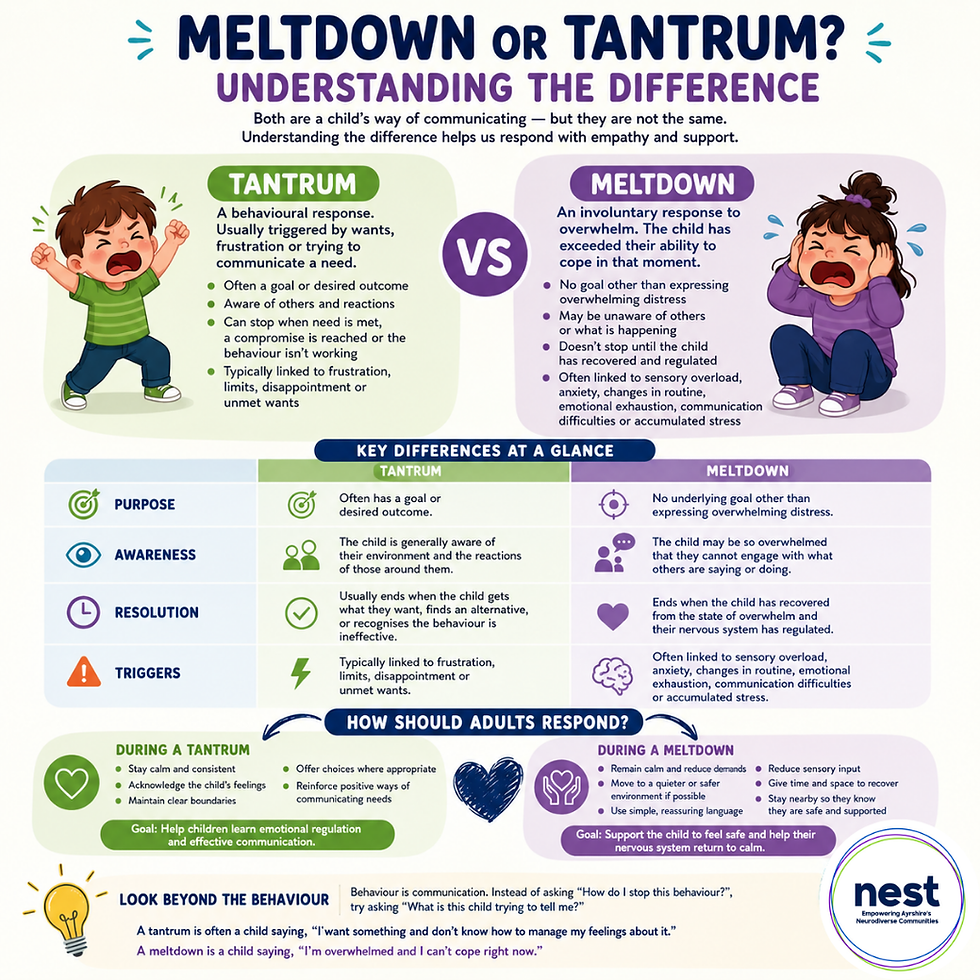
When behaviour changes unexpectedly, it is natural to ask, "What's wrong?" However, the more helpful question is often, "What is this person trying to tell us?"
For neurodivergent individuals in particular, changes in behaviour are frequently a form of communication.
Rather than viewing behaviour as a problem to be fixed, it is important to understand the underlying reasons behind it.
Behaviour Is Communication 🗣️
All behaviour serves a purpose.
Whether someone is becoming more withdrawn, emotional, frustrated, or reactive, a behavioural change is often a signal that something in their environment, health, emotions, or circumstances has changed.
Many neurodivergent individuals may find it difficult to identify, process, or communicate what they are experiencing.
As a result, stress and discomfort can sometimes appear through changes in behaviour before they can be expressed in words.
The behaviour itself is rarely the whole story.
Physical Health Factors 🩺
One of the first areas to consider when behaviour changes suddenly is physical health.
Illness, pain, fatigue, headaches, digestive issues, allergies, hormonal changes, or sleep difficulties can all have a significant impact on mood and behaviour.
For someone who struggles to recognise or communicate physical discomfort, behavioural changes may be the clearest indicator that something is wrong.
Questions to consider include:
Has their sleep pattern changed? 😴
Are they eating and drinking normally? 🍽️
Have there been any recent illnesses or injuries? 🤒
Could they be experiencing pain or discomfort? 💔
Have there been changes in medication? 💊
Sometimes what appears to be a behavioural issue is actually a health issue that requires attention and support.
Sensory Overload 🤯
Many neurodivergent individuals experience the world differently through their senses.
Sounds, lights, smells, textures, temperatures, and crowded environments can all contribute to sensory overload.
If someone's behaviour has changed suddenly, consider whether their sensory environment has also changed.
Examples might include:
A new classroom or workplace 🏫
Increased noise levels 🔊
Changes in routine 📅
New clothing or equipment 🧦
Busy social events 🧑🤝🧑
Seasonal changes ❄️
When sensory demands become overwhelming, individuals may become more anxious, reactive, withdrawn, or exhausted.
Emotional Wellbeing and Mental Health 🧠
Changes in emotional wellbeing often influence behaviour long before they are recognised by others.
Anxiety, stress, low mood, grief, loneliness, and burnout can all lead to noticeable behavioural changes.
Signs might include:
Increased irritability 😤
Reduced tolerance for everyday demands 🙅♀️
Avoidance of previously enjoyed activities 🎮
Emotional outbursts 😭
Increased need for reassurance 🤝
Social withdrawal 🧑🤝🧑
Neurodivergent individuals can be particularly vulnerable to chronic stress when they are consistently trying to manage environments that do not meet their needs.
Changes in Routine and Environment 📅
Many neurodivergent people thrive with predictability and routine.
Sudden changes that may seem minor to others can feel significant and overwhelming.
Behaviour changes may occur following:
Moving home 🏠
Starting a new school or job 💼
Changes in staff, teachers, or support workers 👩🏫
Alterations to daily routines 📅
Family changes 👶
Holidays or transitions 🎄
Even positive changes can create uncertainty and stress.
Understanding what has changed around the individual can often provide valuable clues.
Burnout and Exhaustion 😴
Neurodivergent burnout is increasingly recognised as a serious issue within the neurodiversity community.
Burnout occurs when the demands placed upon someone consistently exceed their capacity to cope.
This can happen after prolonged periods of masking, adapting, meeting expectations, or managing overwhelming environments.
Signs of burnout may include:
Increased emotional sensitivity 🥲
Reduced tolerance for demands 🙅♀️
Loss of skills or confidence 😀
Withdrawal from social situations 🧑🤝🧑
Extreme fatigue 😴
Increased anxiety 😨
What may appear to be challenging behaviour could actually be a sign that someone has reached their limit and needs rest, support, and understanding.
Unmet Needs ❤️🩹
Sometimes behaviour changes occur because an important need is not being met.
These needs may include:
Feeling safe 🛟
Being understood 💭
Having choice and control ⚖️
Accessing support 🤝
Feeling included 🧑🤝🧑
Having opportunities for rest and recovery 🛏️
When needs go unmet for extended periods, frustration and distress can build until they become visible through behaviour.
What Should You Do When Behaviour Changes Suddenly?
When someone's behaviour changes unexpectedly, it can be tempting to focus on stopping the behaviour as quickly as possible.
However, the most effective approach is usually to slow down, observe, and investigate the possible causes.
1. Stay Calm 😌
Your response can influence the situation significantly.
If you react with frustration, panic, or punishment, the individual may become even more distressed.
Take a breath, remain calm, and remember that behaviour is often a sign that something is not right.
2. Look for Recent Changes 🔎
Think about what has changed in the person's life recently. Even small changes can have a significant impact.
Consider:
Changes at home, school, or work 🏫
New routines or expectations 📅
Relationship difficulties 🧑🤝🧑
Transitions or upcoming events 🔄️
Increased demands or responsibilities 🙅♀️
Sometimes identifying a recent change is the key to understanding the behaviour.
3. Check Physical Needs First 🩺
Before assuming a behavioural cause, consider physical wellbeing.
Ask yourself:
Are they getting enough sleep? 😴
Are they eating and drinking adequately? 🍽️
Could they be unwell or in pain? 🤒
Have medications changed? 💊
Are they experiencing hormonal changes or fatigue? 🫠
A simple physical issue can often explain a dramatic change in behaviour.
4. Reduce Demands Where Possible 🙅♀️
If someone is overwhelmed, adding more pressure can make things worse.
Consider temporarily reducing demands, expectations, or non-essential tasks while you explore what's going on.
This can help lower stress levels and prevent further escalation.
5. Create Opportunities for Communication 🗣️
Not everyone can immediately explain what is wrong.
Offer different ways to communicate, such as:
Talking 🗣️
Writing 📝
Drawing ✍️
Using visual supports 👀
Text messaging 💬
Rating scales or emotion charts 🌡️
Avoid pushing for answers.
Instead, create a safe environment where communication can happen when the person is ready.
6. Consider Sensory Needs 🤯
Ask whether the environment may be contributing to distress.
Simple adjustments can make a big difference:
Lower noise levels 🔊
Reduce bright lighting 💡
Provide quiet spaces 🤫
Allow movement breaks 🏃
Offer sensory tools or comfort items 🧸
Sometimes addressing sensory overload leads to immediate improvements.
7. Listen More Than You Speak 👂
When someone shares their experience, focus on listening rather than solving.
Try statements such as:
"I've noticed things seem harder lately."
"I'm here if you'd like to talk."
"What can I do to help?"
"You don't need to handle this on your own."
Feeling heard and understood can be incredibly powerful.
8. Keep a Record of Patterns 📝
If the behaviour continues, keeping notes can help identify triggers.
Record:
When it happens
Where it happens
Who is present
What happened beforehand
How long it lasts
What helps afterwards
Patterns often emerge that can guide future support strategies.
Avoid Jumping to Conclusions 🦘
It can be tempting to label behaviour as attention-seeking, defiant, lazy, or difficult.
However, these assumptions often prevent us from understanding what is really happening.
Instead of asking:
"How do we stop this behaviour?"
Try asking:
"What might this behaviour be communicating?"
"What has changed recently?"
"What support might be needed?"
"What is making life harder right now?"
Approaching behaviour with curiosity rather than judgement creates opportunities for genuine understanding.
When behaviour changes suddenly, it is rarely random. It is often a signal that something has changed, a need is unmet, or a person is struggling in ways that may not be immediately visible.
Rather than viewing behaviour as the problem, we should see it as valuable information.
By staying curious, investigating potential causes, and responding with empathy and support, we can help neurodivergent individuals feel safe, understood, and empowered.
Sometimes the question is not "How do we stop the behaviour?" but rather "What is this behaviour trying to tell us?"
When we start there, better outcomes often follow for everyone involved.



Comments