


A-Z of Neurodivergence: R is for Rejection Sensitivity 💔

Most people have experienced rejection at some point in their lives.
It might be missing out on an opportunity, receiving criticism, feeling excluded from a conversation, or worrying that someone is upset with us.
For some neurodivergent people, however, these experiences can feel particularly intense.
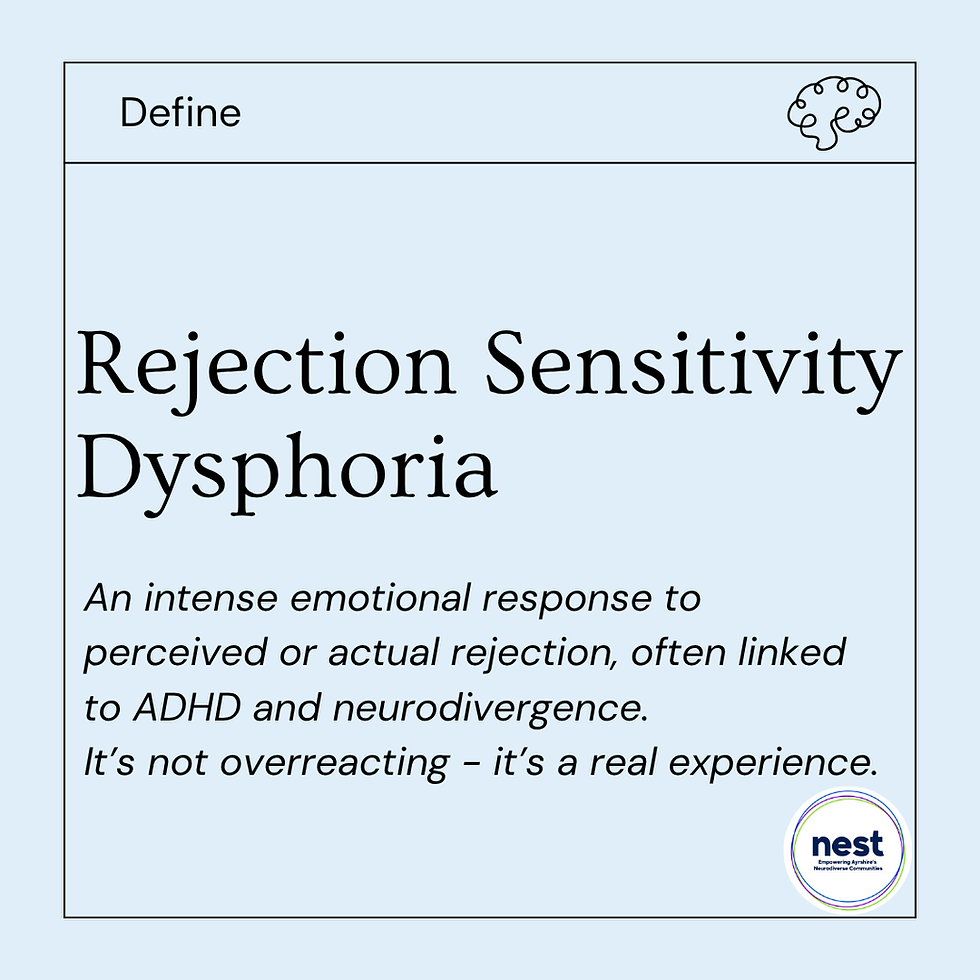
Rejection sensitivity refers to a heightened emotional response to real or perceived rejection, criticism, disapproval or failure.
While it is often associated with Rejection Sensitive Dysphoria (RSD), it is important to recognise that experiences exist on a spectrum and may affect people differently.
Rejection sensitivity is commonly discussed within ADHD and autistic communities, but it can also be experienced by people with a range of neurodivergent identities.
It is not about being "too sensitive" or unable to accept feedback.
Instead, it is often linked to emotional processing, past experiences and the impact of living in environments where difference has not always been understood or valued.
What Can Rejection Sensitivity Look Like? 💭
Rejection sensitivity can show up in many different ways.
Someone might:
Overthink conversations long after they have ended 💭
Worry they have upset someone without evidence 😟
Feel deeply hurt by criticism or feedback 💔
Avoid trying new things for fear of failure 🚧
Struggle to ask for help 🤝
Become anxious when messages go unanswered 📱
Seek reassurance from others 🫶
Withdraw after conflict or misunderstandings 🚪
Experience intense feelings of embarrassment or shame 🫣
For some people, the response may be internal, leading to self-criticism, anxiety or withdrawal.
For others, it may be more visible and involve frustration, tears or emotional overwhelm.
Why Might Neurodivergent People Experience Rejection Sensitivity? 💜
There is no single explanation.
Many neurodivergent people grow up receiving frequent messages that they are "too much", "too loud", "too quiet", "too emotional", "too disorganised" or somehow doing things the "wrong" way.
Over time, repeated experiences of misunderstanding, correction, exclusion or criticism can affect how safe it feels to make mistakes, ask questions or be fully yourself.
Some neurodivergent people also notice that they are highly attuned to social cues, changes in tone of voice, facial expressions or communication patterns.
While this can be a strength, it can sometimes lead to heightened worry about how interactions are being interpreted.
It's also worth remembering that many neurodivergent people have experienced bullying, stigma or rejection simply because their way of communicating, thinking or interacting is different.
These experiences can shape how future interactions are perceived.
When Rejection Isn't Actually Rejection 🤔
One of the most challenging aspects of rejection sensitivity is that the brain may interpret uncertainty as rejection.
For example:
A colleague sends a brief email. 📧
A friend takes longer than usual to reply. ⏳
Someone seems distracted during a conversation. 🤔
Feedback is given without much context. 📝
While these situations may have nothing to do with rejection, they can trigger worry, self-doubt or overthinking.
The emotional response is real, even when the perceived rejection may not be.
Recognising this distinction can be helpful.
It allows us to pause, gather more information and consider alternative explanations before assuming the worst.
The Impact of Rejection Sensitivity 💔
Rejection sensitivity can affect many areas of life, including:
Relationships 🤝
Fear of rejection can make it difficult to trust others, express needs or navigate disagreements.
Some people may become people-pleasers in an effort to avoid conflict, while others may withdraw to protect themselves from potential hurt.
Education and Employment 🎓
The fear of criticism or mistakes can sometimes prevent people from sharing ideas, applying for opportunities or taking on new challenges.
Feedback, even when constructive, may feel overwhelming or personal.
Self-Esteem 🪞
Repeated experiences of rejection sensitivity can contribute to self-doubt and a harsh inner critic.
Over time, people may begin to question their abilities or believe they are somehow "not good enough".
Supporting Yourself 🤗
If rejection sensitivity is something you experience, you're not alone.
While it may not disappear entirely, there are ways to reduce its impact.
Notice the Pattern 📊
Sometimes simply recognising that rejection sensitivity is showing up can be powerful.
Ask yourself:
What evidence do I have? 🔍
Am I reacting to what happened, or what I fear happened? 💭
Is there another possible explanation? 🤔
Challenge the Inner Critic ⛔
Many neurodivergent people develop a strong inner critic after years of trying to fit into environments that weren't designed with them in mind.
Try speaking to yourself as you would a trusted friend.
Would you judge them as harshly as you judge yourself?
Avoid Mind Reading 🔮
We rarely know exactly what someone else is thinking.
When communication feels uncertain, try to avoid filling in the gaps with worst-case scenarios.
Seek Clarification 🔎
Where appropriate, asking for clarification can help reduce misunderstandings.
For example:
"Can I check what you meant by that feedback?"
or
"I noticed your message seemed brief and wanted to make sure everything is okay."
Build Self-Compassion 🥰
Everyone experiences mistakes, misunderstandings and rejection.
Our worth is not determined by a single interaction, missed opportunity or piece of feedback.
Supporting Others 🤝
A little understanding can go a long way.
Be Clear and Kind 💬
Ambiguous communication can sometimes increase anxiety.
Clear, direct and compassionate communication can help reduce uncertainty.
Balance Feedback ⚖️
When providing feedback, be specific and constructive.
Highlight strengths alongside areas for development.
Avoid Dismissing Feelings 💖
Comments such as:
"You're overreacting." ❌
"It's not a big deal." 🚫
"You're too sensitive." 💔
can feel invalidating.
Instead, try:
"I can see this has really affected you." 💜
"Would it help to talk it through?" 💬
"Can I clarify what I meant?" 🤝
Offer Reassurance When Needed 🫶
For some people, a small amount of reassurance can help break the cycle of uncertainty and self-doubt.
Create Psychologically Safe Environments 🛡️
Whether at home, work or in education, people are more likely to thrive when mistakes are treated as opportunities for learning rather than reasons for shame.
Rejection sensitivity isn't about weakness or a lack of resilience.
For many neurodivergent people, it is connected to a lifetime of experiences, emotional processing differences and navigating environments that may not always have felt safe or understanding.
By recognising rejection sensitivity and talking about it openly, we can help reduce shame, increase self-awareness and create more supportive relationships.
Because everyone deserves to feel accepted, valued and understood for who they are.



Comments