


Understanding Rejection Sensitivity Dysphoria: When Rejection Hurts More Than It Should 😥

Rejection is a part of life. Most of us have felt the sting of criticism, exclusion, or failure at some point. But for some, these experiences trigger a level of emotional pain that feels overwhelming, even unbearable.
This intense reaction is known as Rejection Sensitivity Dysphoria (RSD) - a term gaining recognition, especially within neurodivergent communities.
What Is Rejection Sensitivity Dysphoria?
Rejection Sensitivity Dysphoria is not an official diagnosis or condition, but it's a widely acknowledged emotional experience.
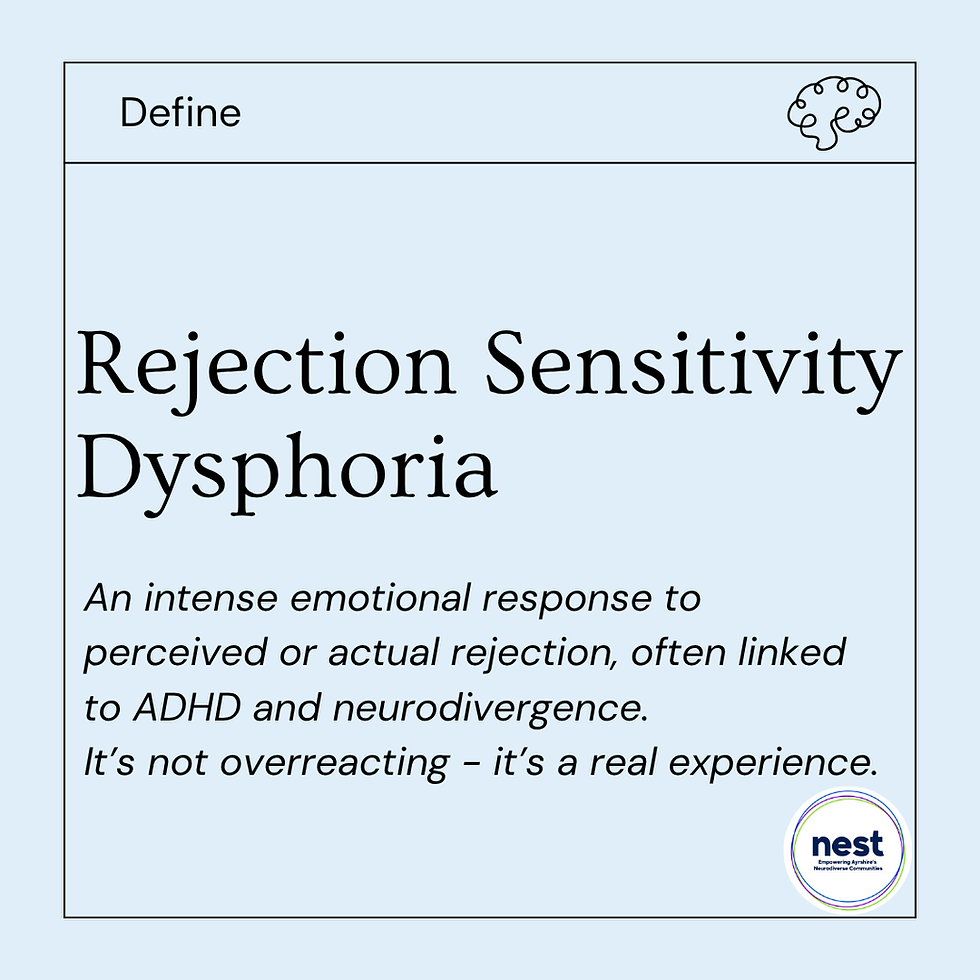
It refers to extreme emotional sensitivity and pain triggered by perceived or actual rejection, criticism, or failure.
The word “dysphoria” comes from Greek, meaning “unbearable discomfort,” which aptly describes the emotional intensity of RSD.
People with RSD often:
Overreact to minor criticism or ambiguous social cues.
Feel intense shame, sadness, or anger.
Replay interactions obsessively, trying to decode perceived rejection.
Withdraw socially or engage in people-pleasing to avoid rejection.
Who Experiences RSD?
RSD is most commonly associated with ADHD, but it’s also seen in individuals with autism, social anxiety, and those who have experienced early life trauma.
For neurodivergent individuals, emotional regulation can be more difficult due to differences in brain structure and processing.
This can amplify the emotional response to rejection, making everyday interactions feel threatening or deeply painful.
How RSD Impacts Daily Life
Living with RSD can affect:
Relationships: Fear of rejection may lead to avoidance, jealousy, or self-sabotage.
Work: Constructive feedback may feel devastating, impacting confidence and performance.
Mental Health: RSD often coexists with anxiety, depression, and low self-esteem.
Many individuals report feeling “too sensitive” or “dramatic,” which can further isolate them and reinforce the cycle of rejection and emotional pain.
Coping Strategies and Support
While RSD can be intense, it is manageable.
Here are some strategies to help navigate its challenges:
1. Identify Triggers 🔍
Recognize situations, phrases, or behaviours that activate your sensitivity. Awareness is the first step toward change.
2. Practice Mindfulness 🧘♂️
Mindfulness and grounding techniques can help regulate your nervous system and reduce emotional intensity during triggering moments.
3. Challenge Negative Thoughts 🙅♀️
RSD often distorts reality. Ask yourself: Is this rejection real or perceived? What else could this mean? Reframing helps reduce emotional reactivity.
4. Build Self-Compassion 💕
Treat yourself with kindness. Replace self-criticism with affirmations and acknowledge your strengths. You are not your worst moment.
Final Thoughts 💭
Rejection Sensitivity Dysphoria is a deeply human experience, especially for those who feel emotions intensely. If you or someone you care about struggles with RSD, know that you're not alone. With the right tools, support, and self-awareness, RSD can become less of a barrier and more of a guide toward deeper emotional understanding.

Comments