


Why Temperature Regulation Can Be Tricky for Neurodivergent People – and How to Help This Season 🌦️

As the seasons change, many of us notice the shift in temperature.
For neurodivergent individuals, this time of year can bring extra challenges.
But why does temperature regulation feel harder for some people, and what can we do to make things easier?
Why Temperature Regulation Matters 🔍
Our bodies are designed to keep a steady internal temperature. For many neurodivergent people - including autistic individuals and those with ADHD - this process can work a little differently. Differences in sensory processing and nervous system regulation can make it harder to notice or respond to temperature changes.
This might mean:
Feeling too hot or too cold when others feel fine.
Taking longer to warm up or cool down.
Experiencing discomfort that affects mood, focus, or energy.
Why Autumn and Winter Can Be Extra Difficult ❄️
Shorter days and colder weather bring new challenges:
Layering clothes can feel uncomfortable for those with sensory sensitivities.
Sudden temperature changes (like moving from a warm indoors to a cold outdoors) can be overwhelming.
Social expectations around clothing choices can add stress.
Energy demands increase as our bodies work harder to stay warm, which can impact fatigue and emotional regulation.
10 Tips to Support Yourself and Others
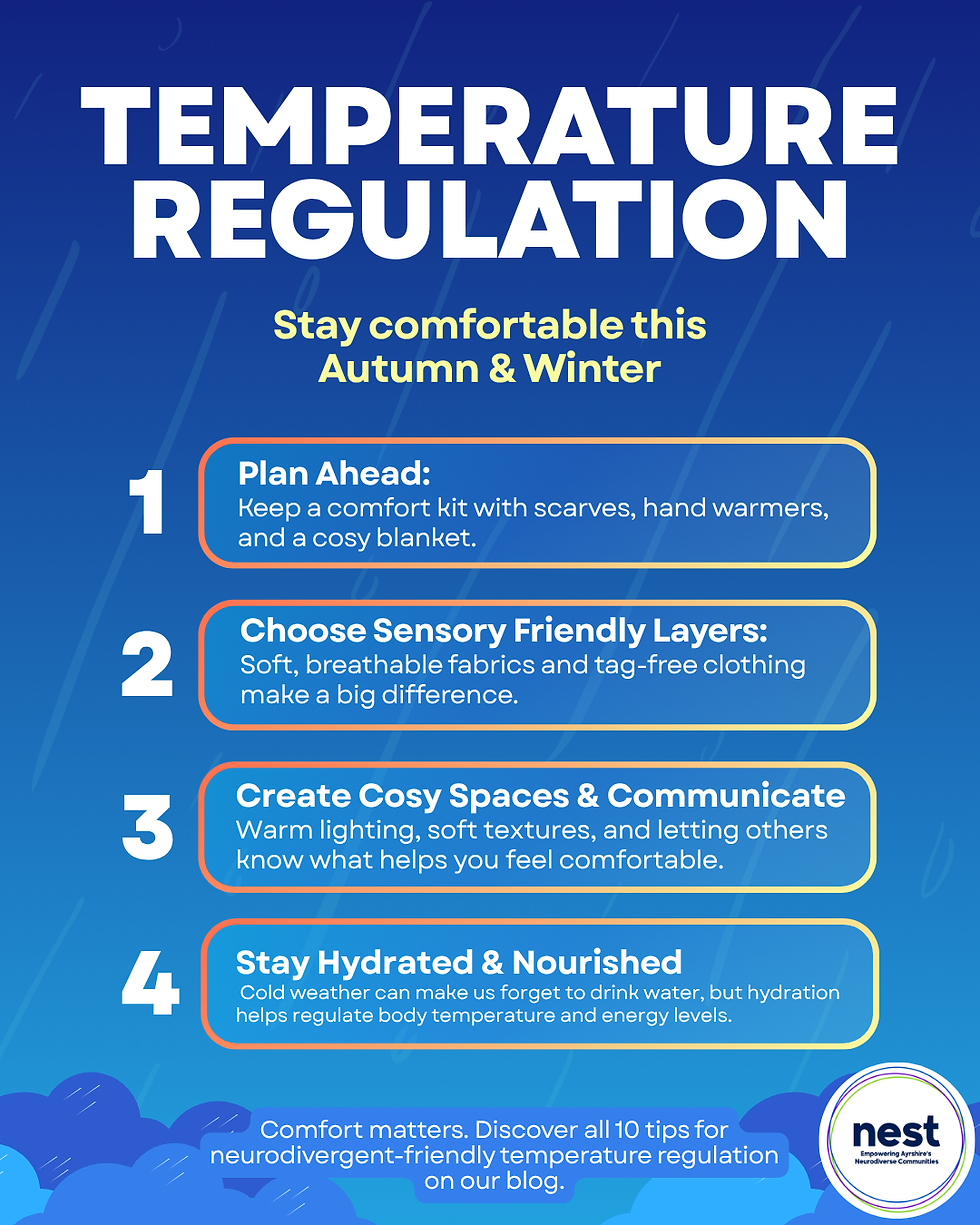
1. Plan Ahead 🧰
Keep a “comfort kit” with items like:
A soft scarf or hat
Hand warmers
A lightweight blanket for indoors
2. Choose Sensory-Friendly Layers 🧥
Look for:
Soft, breathable fabrics
Seamless or tag-free options
Clothes that are easy to put on and take off
3. Use Technology 💻
Set reminders to check the weather before leaving home.
Use smart thermostats or portable heaters to keep spaces comfortable.
4. Listen to Your Body 👂
It’s okay to dress differently from others.
Comfort matters more than appearance.
5. Hydrate and Nourish 🥤
Cold weather can make us forget to drink water.
Staying hydrated helps regulate body temperature.
6. Warm Up Gradually 🫖
If you’ve been outside, give yourself time to adjust indoors.
A warm drink or gentle movement can help.
7. Cool Down Safely ⛄
If you feel overheated, try:
Removing one layer at a time
Using a cool cloth on your wrists or neck
8. Create Cosy Spaces 🛋️
Add soft blankets, cushions, and warm lighting to make your environment feel safe and comfortable.
9. Communicate Needs 💬
If you’re with others, let them know what helps you feel comfortable. Simple phrases like “I need a minute to warm up” can make a big difference.
10. Support Each Other 🫂
If you’re a parent, carer, or friend:
Offer choices instead of instructions (“Would you like a jumper or a hoodie?”).
Validate feelings (“It makes sense you feel cold – let’s find something that helps.”).
Temperature regulation isn’t just about comfort – it’s about wellbeing. By understanding these challenges and planning ahead, we can make this season easier and more enjoyable for neurodivergent individuals and their families.


Comments